Building in Public Without Becoming a Guru
The content I do not want to make
I am not interested in pretending I predicted everything.
I do not want every trade to become a victory lap and every mistake to disappear. That stuff is easy to package. It is also mostly useless.
The version I care about is closer to a field notebook:
- what I saw
- what I built
- how I structured the idea
- where I was wrong
- what the dashboard caught
- what the dashboard missed
- what becomes a rule next time
That is the public record I want here.
Why publish any of it?
Because private work can compound quietly, but public work leaves a trail.
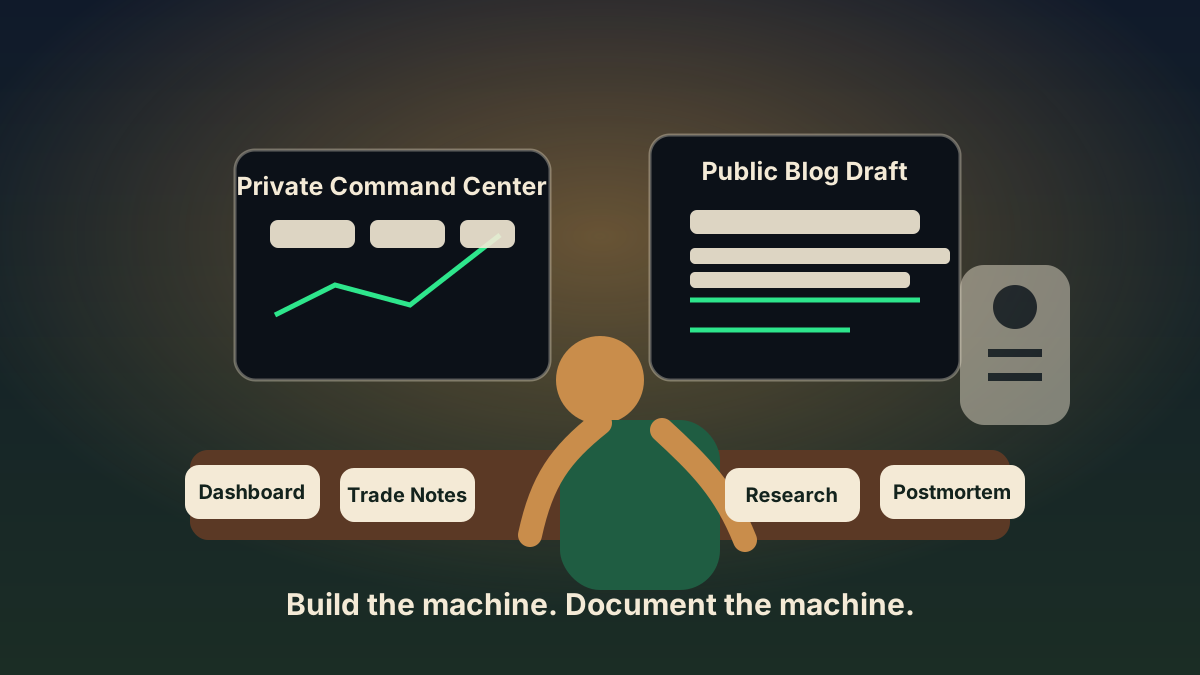
A dashboard can make me better. A journal makes the work inspectable. It creates accountability. It gives me writing reps. It gives future collaborators something real to judge. It documents the process before the outcome makes everybody sound smarter than they were.
The trick is publishing process without turning uncertainty into a performance.
The lanes worth documenting
There are a few lanes I want to write about more often.
Trading Command Center
A private dashboard for market ideas, options structures, watchlists, dossiers, and trade reviews.
The point is not prettier prices. The point is fewer dumb decisions.
Options Council
An agent-assisted review process that argues with a trade before I make or adjust it.
That is where LEAPs, short calls, rolls, assignment risk, and premium harvesting get pulled out of gut-feel mode and forced into words.
Public records and local intelligence
A way to organize local public information, entity relationships, timelines, and civic questions without turning incomplete records into reckless claims.
Automation and AI workflows
Scripts, agents, dashboards, and small tools that remove repeated manual work.
The best automation is boring. It saves the attention for the part that still needs judgment.
Small Town Capital
The umbrella: markets, local research, content, tools, and eventually capital. Same curiosity, different surfaces.
The voice
The target is something like:
small-town intelligence desk
hedge fund notebook
garage-built Bloomberg Terminal for weirdos
Smart, but not sterile. Funny, but not unserious. Skeptical, but not bitter. Convicted, but willing to be wrong.
If the writing ever starts sounding like a finance influencer wearing a Patagonia vest in a rented podcast studio, something has gone wrong.
What success looks like
Success is not one viral post.
Success is an archive that proves I can research deeply, build useful tools, review mistakes honestly, and connect local and market intelligence without losing the thread.
If the archive gets good enough, it becomes more than a blog. It becomes a credibility layer for Small Town Capital.
The next step
Publish more field notes.
Not perfect essays. Not final answers. Just real progress from the machine while it is still awkward.
A trade structure. A dashboard feature. A public-record trail. A tool that worked. A mistake that needs to become a rule.
Build the machine. Document the machine. Let the archive compound.